Condenser Dryers
1 product

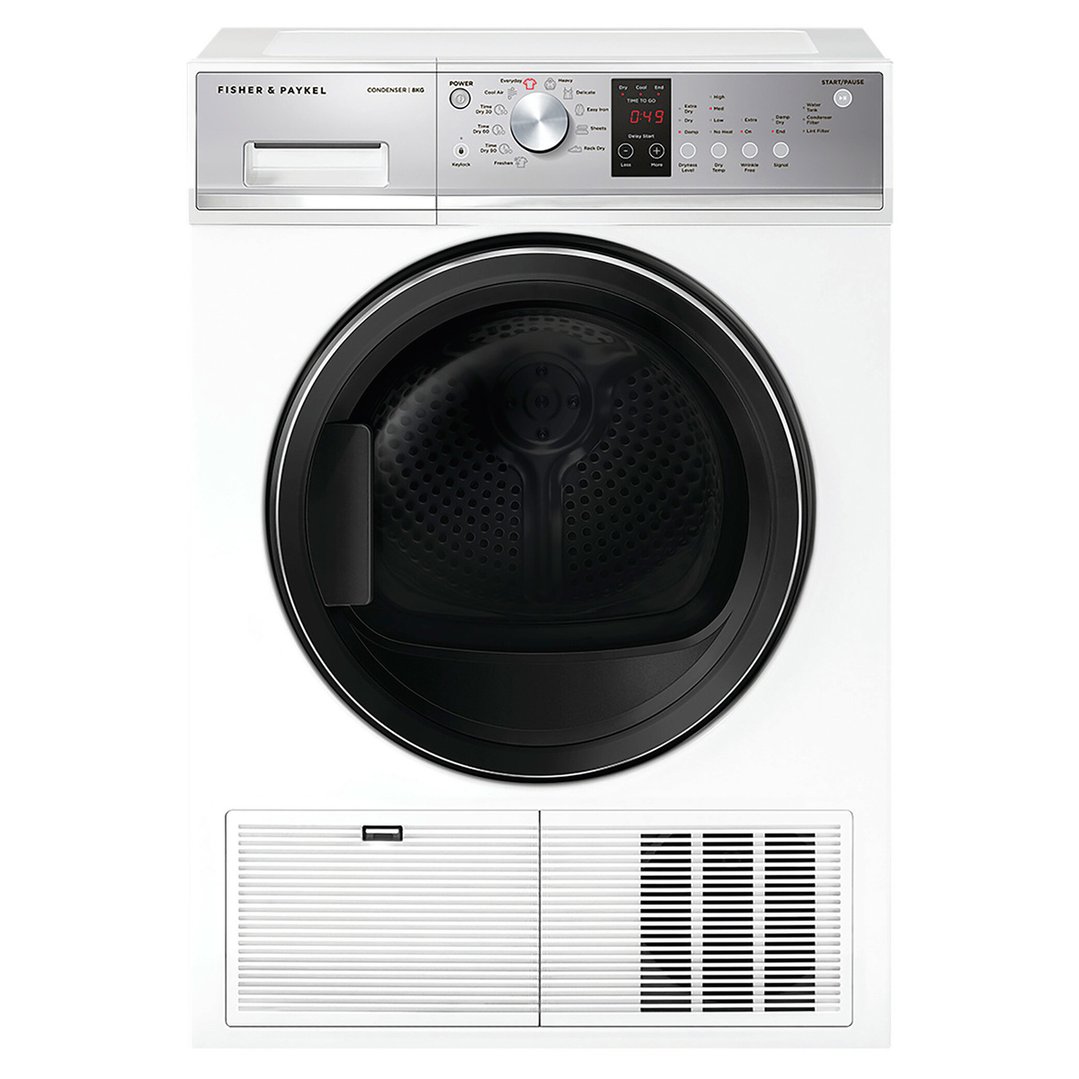
Looking for a dryer that’s flexible to install and easy to use? A condenser dryer could be the ideal addition to your laundry. Unlike vented dryers, a condenser tumble dryer doesn’t need to vent moisture outside, making it perfect for apartments or homes without direct external ventilation. If you're unsure how a condenser dryer compares to other types, we’ve answered the most common questions below to help you choose the right model. You can also explore our full range of clothes dryers and washers & dryers or compare with vented dryers to see what best suits your space.
FAQs
1. What is a condenser dryer and how does it work?
A condenser dryer is a type of electric clothes dryer that uses heated air to extract moisture from your laundry, then condenses that moisture into water. Unlike traditional vented dryers, which release hot, damp air through an external hose, a dryer with water tank stores the condensed moisture in a built-in reservoir or sends it to a drain. This means you can place it almost anywhere in the home - making it a popular easy-install dryer solution for households with limited ventilation.
2. What are the benefits of a condenser dryer?
A condenser tumble dryer is incredibly flexible to install and great for renters or homes without outdoor venting. Key benefits include:
- No need for external ducting
- Flexible placement in internal laundries, cupboards or under benches
- Modern features like auto-sensing, anti-crease modes and child locks
- Cleaner laundry environment, with less lint and moisture released into the room
While they may use more energy than a heat pump dryer, many models are still designed to be relatively energy efficient dryers, especially when used with sensor drying.
3. Which is best: condenser dryer or vented dryer?
Choosing between a condenser dryer and a vented dryer depends on your setup. A vented dryer may dry slightly faster and cost less upfront, but it needs a nearby window or external wall to release moist air. A condenser dryer, on the other hand, gives you far more freedom on where you place it - no venting required. It’s an ideal choice for apartments, internal laundries, or any home without direct ventilation access.
4. What is the difference between a condenser dryer and a heat pump dryer?
Both dryers remove moisture internally, but a heat pump dryer recycles and reuses warm air, making it the most energy-efficient dryer option available. A condenser dryer, while slightly less efficient, is usually more affordable and dries faster than a heat pump model. If you want a reliable middle ground between cost, performance, and ease of use, a condenser dryer is a great all-rounder.
5. Where should you not put a condenser tumble dryer?
Although a condenser dryer doesn’t need external venting, it does release heat into the room during use. That means you should avoid placing it in completely enclosed spaces like cupboards or windowless closets. Poor ventilation can cause heat and humidity to build up. For best results, install your condenser tumble dryer in a space with good airflow - like a laundry room, utility space, or open kitchen/laundry layout. If ventilation is limited, a heat pump dryer might be a better low-heat option, or you can explore compact vented dryers that suit your space.